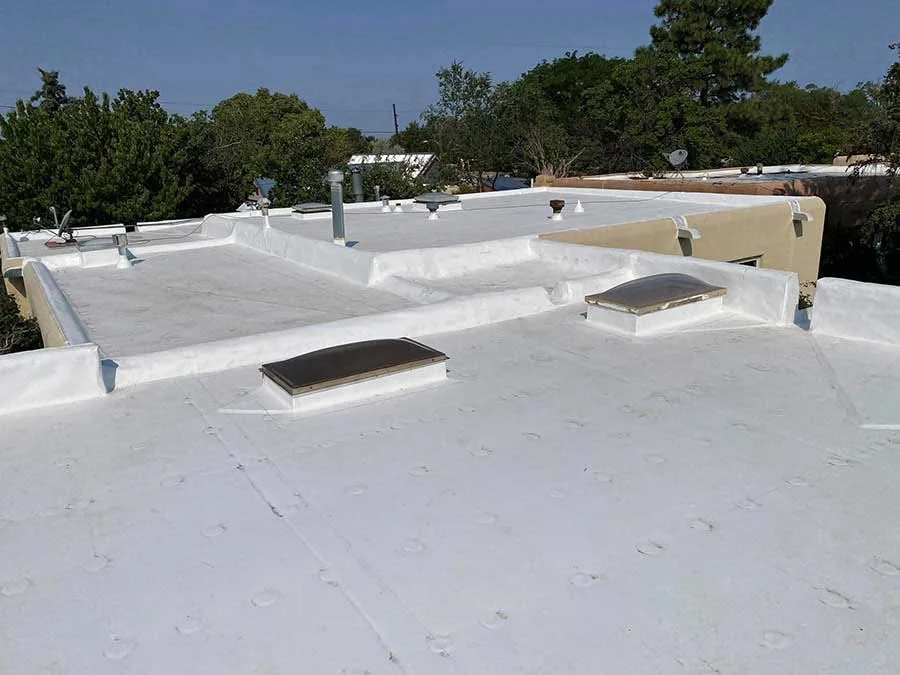
What Is TPO Roofing and Why Consider It
Thermoplastic Polyolefin roofing represents a single-ply membrane system designed specifically for flat and low-slope applications. This white or light-colored material reflects sunlight efficiently, reducing cooling costs in warm climates. The membrane consists of ethylene-propylene rubber combined with polypropylene, creating a flexible yet durable surface that resists ultraviolet radiation, ozone, and chemical exposure.
Property owners throughout New Mexico choose this system for its performance in high-altitude environments where temperature fluctuations challenge traditional materials. The reflective surface remains particularly valuable during Santa Fe’s intense summer sun, when roof temperatures can exceed 160 degrees on darker surfaces. This roofing solution offers heat-welded seams that create watertight bonds stronger than the membrane itself, eliminating reliance on adhesives that may degrade over time.
The installation process involves mechanical attachment, fully adhered methods, or ballasted systems depending on building specifications. Each approach provides distinct advantages for different structural requirements and environmental conditions. Wind uplift resistance varies by attachment method, making professional assessment crucial for selecting the appropriate technique for your specific location and building design.
Key Advantages of Choosing This System
Energy efficiency stands as the primary benefit driving adoption across residential and commercial properties. The reflective white surface meets ENERGY STAR requirements, potentially reducing cooling costs by 20 to 30 percent compared to darker roofing materials. This translates to measurable savings on utility bills throughout the hot season, which extends from May through September in northern New Mexico.
Durability proves equally important for buildings exposed to Santa Fe’s variable weather patterns. The membrane resists punctures, tears, and impacts better than many alternatives while maintaining flexibility in cold temperatures. This flexibility prevents cracking during winter freezes, a common failure point for rigid systems. Properly installed membranes typically last 20 to 30 years with minimal maintenance requirements beyond periodic inspections and cleaning.
Installation speed creates additional value for property owners managing occupied buildings. Skilled contractors complete most projects in days rather than weeks, minimizing disruption to daily operations. The heat-welding process works reliably in various weather conditions, unlike adhesive-based systems requiring specific temperature ranges. This reliability proves particularly valuable during Santa Fe’s unpredictable spring weather when installation windows may be limited.
Environmental considerations influence many property decisions today. This material contains no chlorine-based compounds and maintains full recyclability at the end of its service life. Manufacturers accept used membranes for processing into new products, reducing landfill waste. The light color also contributes to urban heat island mitigation, lowering ambient temperatures in developed areas.
The Professional Installation Process
Proper surface preparation determines long-term performance more than any other factor. Contractors begin by removing existing materials if necessary, then inspecting the roof deck for damage, moisture, or structural issues. Any compromised sections require repair before proceeding. The deck must be clean, dry, and smooth to prevent irregularities from telegraphing through the new membrane.
Insulation installation follows deck preparation in most projects. Polyisocyanurate or expanded polystyrene boards provide thermal resistance while creating a uniform surface for the membrane. Board thickness depends on desired R-value and local energy code requirements. Proper board layout prevents thermal bridging and ensures consistent insulation performance across the entire roof area.
Membrane attachment methodology varies based on building requirements and local wind loads. Mechanically attached systems use specialized fasteners and plates secured through the membrane and insulation into the structural deck. Fully adhered applications bond the membrane directly to the substrate using specially formulated adhesives. Ballasted systems rely on river rock or pavers to hold the membrane in place, suitable for structures capable of supporting additional weight.
Seam welding represents the most critical installation phase. Contractors use hot-air welding equipment to fuse membrane edges together, creating bonds that exceed the material’s inherent strength. Proper welding requires specific temperature settings, overlap widths, and welding speeds. Quality installers perform probe tests on sample seams throughout the project to verify bond integrity before moving to subsequent areas.
Flashing and penetration details demand particular attention during installation. Pipes, vents, HVAC equipment, and roof edges require custom-fabricated TPO flashings that integrate seamlessly with the field membrane. These transition areas represent potential weak points if executed improperly. Contractors with specific training in thermoplastic systems understand the techniques necessary to create lasting watertight seals around every penetration and termination point.
Maintenance Considerations for Long-Term Performance
Regular inspections identify potential issues before they develop into costly problems. Property owners should schedule professional evaluations twice annually, typically in spring and fall. These assessments examine seam integrity, flashing conditions, membrane surface quality, and drainage performance. Early detection of minor defects allows for simple repairs that prevent water intrusion and extend system lifespan.
Surface cleaning maintains reflectivity and prevents organic growth. Santa Fe’s occasional monsoon moisture combined with airborne dust creates conditions where algae or dirt accumulation may reduce reflective properties. Gentle washing with approved cleaning solutions restores the membrane’s appearance and energy performance. Avoid pressure washing or harsh chemicals that may damage the membrane surface or degrade protective coatings.
Drainage system maintenance proves equally important for system longevity. Blocked drains or scuppers cause water ponding, which accelerates membrane degradation and stresses seams. Inspect and clear all drainage components after storms, particularly during fall when leaves and debris accumulate. Address any low spots where water collects for more than 48 hours after rainfall, as prolonged exposure shortens membrane life.
Minor repairs require specialized materials and techniques specific to thermoplastic membranes. Patches must be heat-welded rather than adhered to ensure proper bonding. Attempting repairs with incompatible materials or incorrect methods creates new leak pathways. Contractors experienced with this system understand proper repair protocols and maintain appropriate materials for quick response to damage from falling branches or equipment movement.
Why Choose Professional Services in Santa Fe
Selecting qualified contractors makes the difference between a system that performs as designed and one that fails prematurely. TPO roof installation requires specific training in thermoplastic welding techniques, membrane handling, and detail construction. Contractors without this specialized knowledge often create defects that manifest as leaks within the first few years. Verify that potential installers maintain manufacturer certifications and carry adequate insurance coverage for commercial roofing projects.
Local experience provides valuable insights into regional conditions affecting system performance. Santa Fe’s high elevation, intense UV exposure, and dramatic temperature swings create unique challenges for roofing materials. Contractors familiar with these conditions select appropriate membrane thicknesses, attachment methods, and insulation configurations for optimal results. They understand how local building codes and wind load requirements influence design decisions.
With over 51 years serving Santa Fe, the team at this roofing company brings proven expertise to every project. The company specializes in thermoplastic systems for both residential and commercial applications, understanding the specific needs of properties throughout northern New Mexico. Their approach combines precise installation techniques with thorough quality control measures, ensuring each project meets manufacturer specifications for warranty compliance. Property owners benefit from quick response times for consultations, accurate project timelines, and clear communication throughout the installation process.
Warranty protection depends entirely on proper installation by approved contractors. Manufacturers offer extensive material warranties covering membrane defects, but these protections become void if installation fails to meet specified standards. Working with certified installers preserves warranty coverage and provides recourse if material issues develop. Additionally, reputable contractors offer workmanship warranties covering installation defects separate from material coverage.
Project planning assistance helps property owners make informed decisions about timing, budget, and material selection. Experienced contractors evaluate existing roof conditions, discuss performance expectations, and explain options for insulation levels, membrane thickness, and attachment methods. This consultation process ensures the final system aligns with building requirements, budget constraints, and long-term performance goals. For properties throughout Santa Fe and surrounding communities, professional guidance prevents costly mistakes and delivers lasting value.